

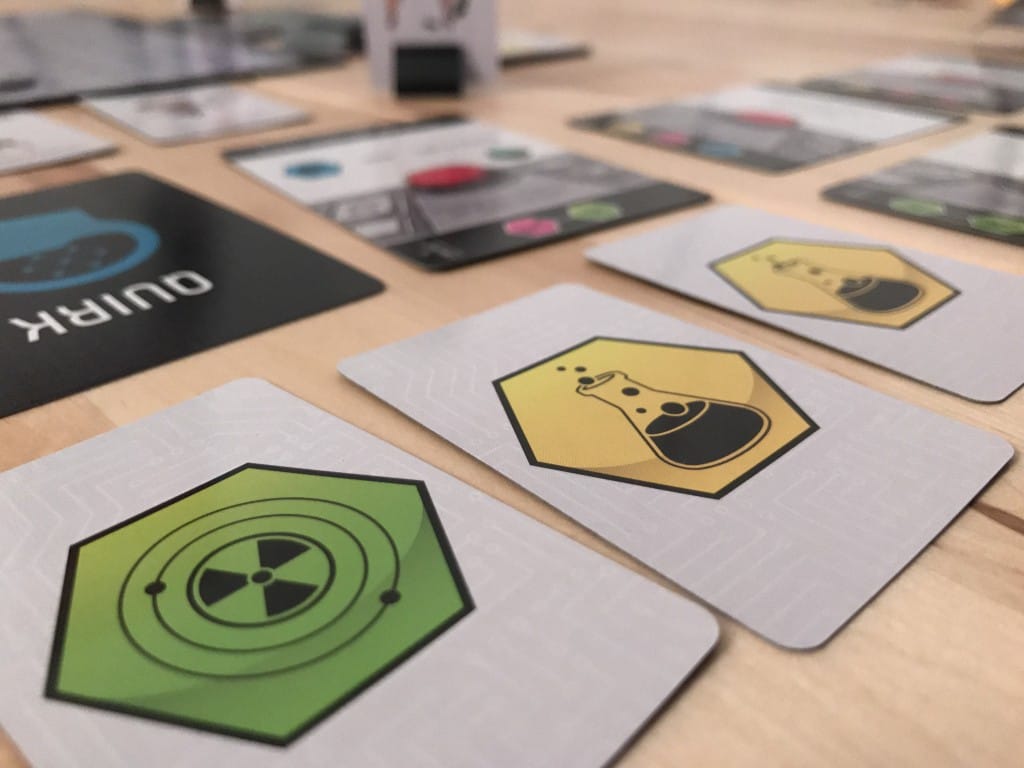
One of a handful of new releases at Gen Con this year for Cryptozoic, Mad Science Foundation, designed by Sharang Biswas and Max Seidman, is a straightforward set collection and drafting game with a bit of variable powers mixed in for good measure. It’s on the lighter end of the spectrum, and despite the size of the box (which we’ll get to), it’s small, short, and easy to setup and learn.
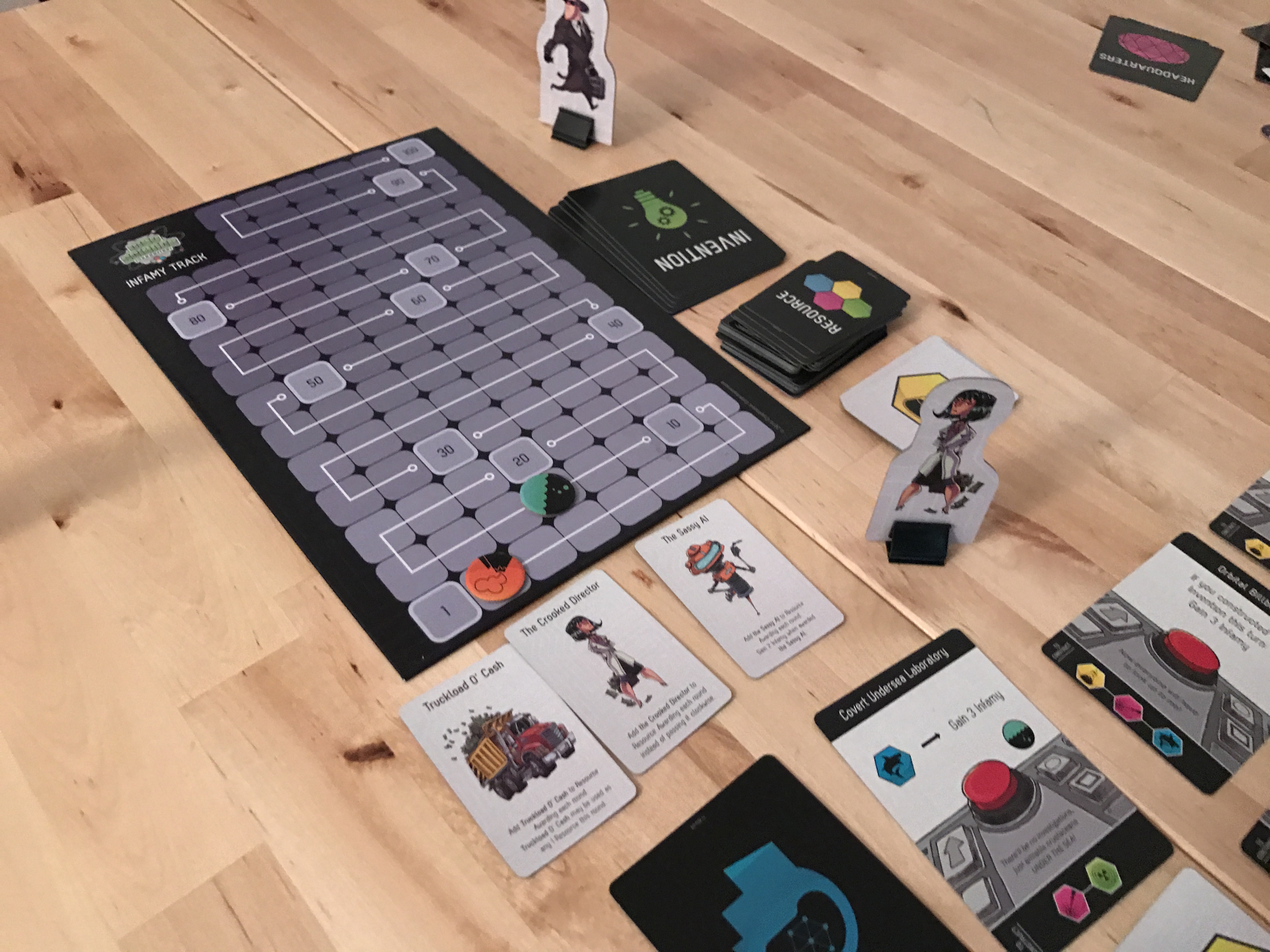
Thematically speaking, I like it. There really aren’t that many games in this genre – not that it’s a massive genre to draw from, but it’s still a fun one. Goofy mad scientists building over the top laboratories and inventions in their bid to take over the world. It’s good, goofy fun, and the artwork in this game, as well as the thematic pairing of the location names is entertaining the first couple of plays through.
The game itself is incredibly light, though, and the big question is whether that relatively thin layer of gameplay holds up the cleverly themed components.
How Mad Science Foundation Plays
Mad Science Foundation consists almost entirely of cards with a handful of standees the scoreboard in the center of the table. At the start of the game, each player will be given a quirk card facedown. This is there variable bonus for the end of the game – the one thing they want to do that will generate extra victory points.
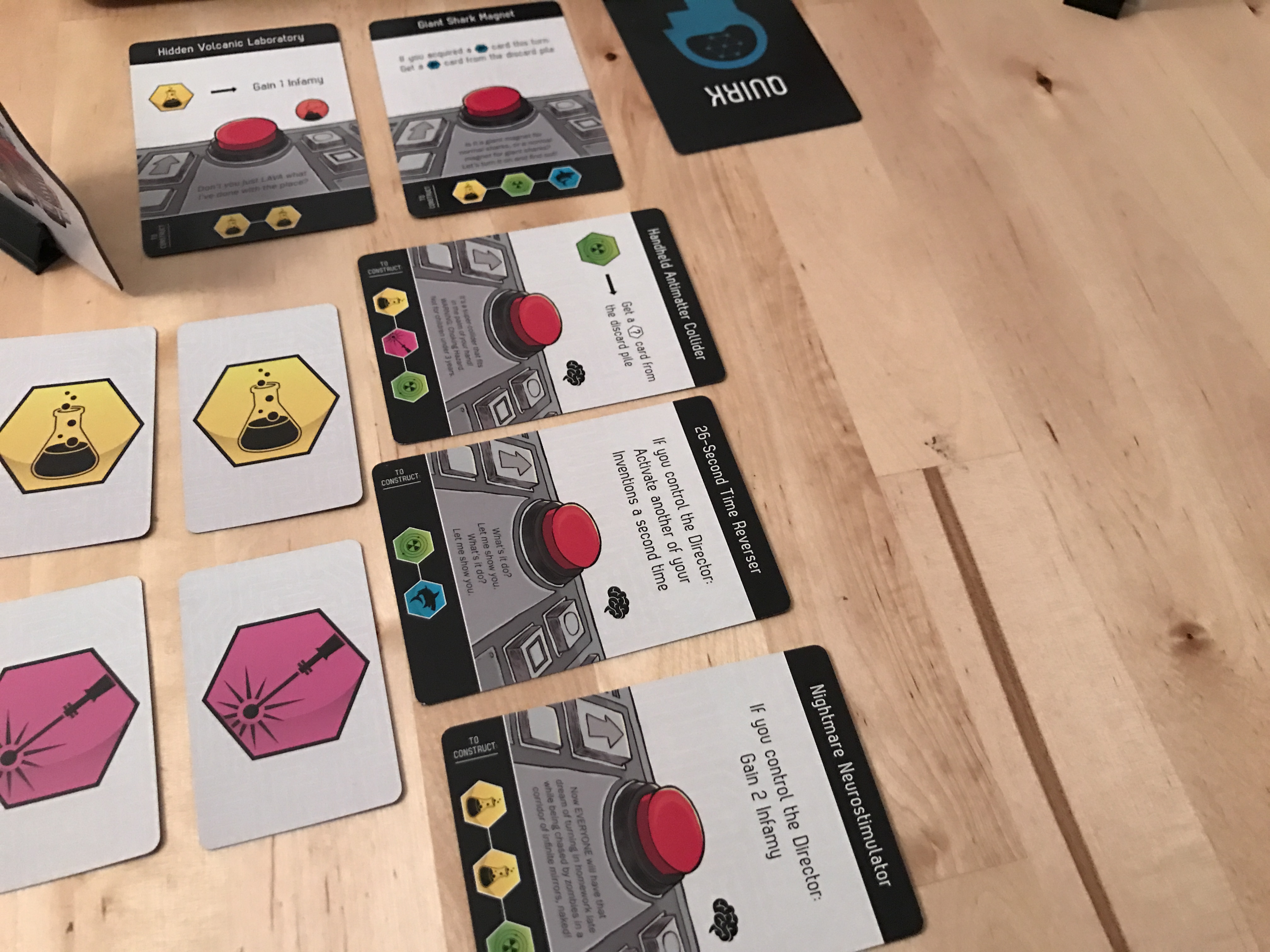
Then each player will receive a headquarters card face up. Like the invention cards you’ll be getting very shortly, this card starts the game sideways as a prototype. That means it needs to be built. To build this (or any of the inventions you draw later), you need to match the symbols at the bottom of the card with the resource cards you’ll be drawing soon.
During setup, you’ll also tweak a couple of things based on player account. The number of cards in the deck, the availability of one of the minions (the Overworked Researcher Minion), and the general layout will be adjusted depending on whether you have 2,3, or 4 players. Finally, you’ll give the Crooked Director to the oldest player who will gain control over it for the first round.
Each round, the Crooked Director will draw 1 Invention Card and resource cards based on the number of players (between 3-5). If you pull one of the minions out of the resource deck, you’ll draw another resource to replace it. The Crooked Director will then split up all this loot into separate piles (equal to the number of players), after which they are drafted, the Crooked Director choosing last. So it’s not a great idea for the Director to make one pile better than the rest – it will only get scooped up faster.

As you gather resources, you will use them to construct inventions, activate inventions that cost resources, or stockpile for endgame scoring (if it matches your quirk). You can also get minions that add some extra fun to the game – free points, wild resources, or blocking the opponents inventions from activating. The crooked director also goes into the pile and becomes something people can choose for their draft action.
When the invention deck is empty, the round finishes and everyone counts up their points, including Quirk points. The player with the most Infamy wins.
What We Like About Mad Science Foundation
This is a fairly quick game. It takes less than 45 minutes to play with the full player count, there aren’t too many tough decisions, and as long as players don’t get too buried in decision making when picking their cards, the game will move along nicely.

The inventions are a lot of fun too as you read through and activate them, even if they can feel samey at a certain point. The theme comes through nicely here and it is fun to work through the decks and compete over the resources, inventions, and minions needed at any given time.
We had fun pretending to be nefarious evil scientists and fighting over resources as they were made available. It’s a lot of fun to watch the Crooked Director work too, giving them grief and hoping the piles work in your favor.
Issues with Mad Science Foundation
As fun as the theme and artwork here is, the game starts to drag pretty fast. The resources in the deck are fairly generic – color coded for Cryptonium, Lasers, Dark Matter and Sharks. After a while, you stop paying attention to what each resource is or does and just start looking at colors and matching symbols.
At the same time, there are several Infamy gaining options that just don’t trigger very often. If the right resources don’t come out of the deck, you may not get to do very much for several turns at a time and because it’s a table-wide draft, you may spend 2-3 turns not getting what you need if someone else also needs it. It’s not fun when two players compete for a large number of the same resources.

The Crooked Director role is a lot of fun, but it can also bog things down and put pressure on a player to balance things as much as possible, which can lead to AP. I said the game shouldn’t take more than 45 minutes, but it certainly has a few times as players just got stuck, trying not get left out with NOTHING they actually needed. The result of all this is that planning is tough, and strategy tougher. You work with what you can get.
And on a non-gameplay related-note, the box size for this game is unnecessarily large. This could easily fit in a small tuckbox. When you open the box, the components are shoved into a small compartment 1/5 the size of the box. The board doesn’t need to be as big as it is either – it’s a small thing, but comically mismatched.
The Bottom Line
The Mad Science Foundation is a fun little game, but it doesn’t have the depth or the variability needed to make it a long-standing member of most gaming rotations. The potential blockage due to the single table draft, the AP that can cripple the Crooked Director player and the nature of the resource to Invention makeup just don’t quite come together in a satisfying enough way.
