

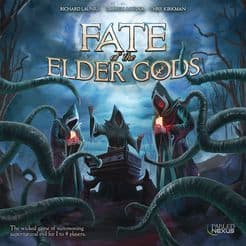
Fate of the Elder Gods is a light-medium weight, tactical board game for 1-4 players, designed by Chris Kirkman, Darrell Lauder, and Richard Launius, and published through Greater Than Games’ Fabled Nexus line.
*A big Thank You to Adam Harris, a cool dude in my game group, for letting me use his Kickstarter copy for this review.
What? Another Cthulu game????
When it comes to big box Cthulu games, Fantasy Flight Games has conditioned many of us to expect a certain kind of experience – namely, a grand adventure soaked with theme, narrative, and LOTS of dice rolling! More often than not, intrepid investigators struggle against cultists and other baddies as they attempt to unleash the old gods upon the world.
Fate of the Elder Gods, with its comparably heavy box and chunky MSRP, nevertheless delivers a very different experience. Instead of adventuring with investigators, players play cultists whose primary goal is to set the old ones free! With regard to gameplay, Fate of the Elder Gods weaves together some familiar mechanisms borrowed from heavier strategy games, such as establishing control over certain areas of the board, as well as placing “workers” (represented by little cultist minis) in those areas in order to make things happen.
If you are sick of Cthulu, should you give this game a chance regardless? Could fans of the whole Lovecraft mythos still have fun with this big box departure from the FFG model?
How to play Fate of the Elder Gods
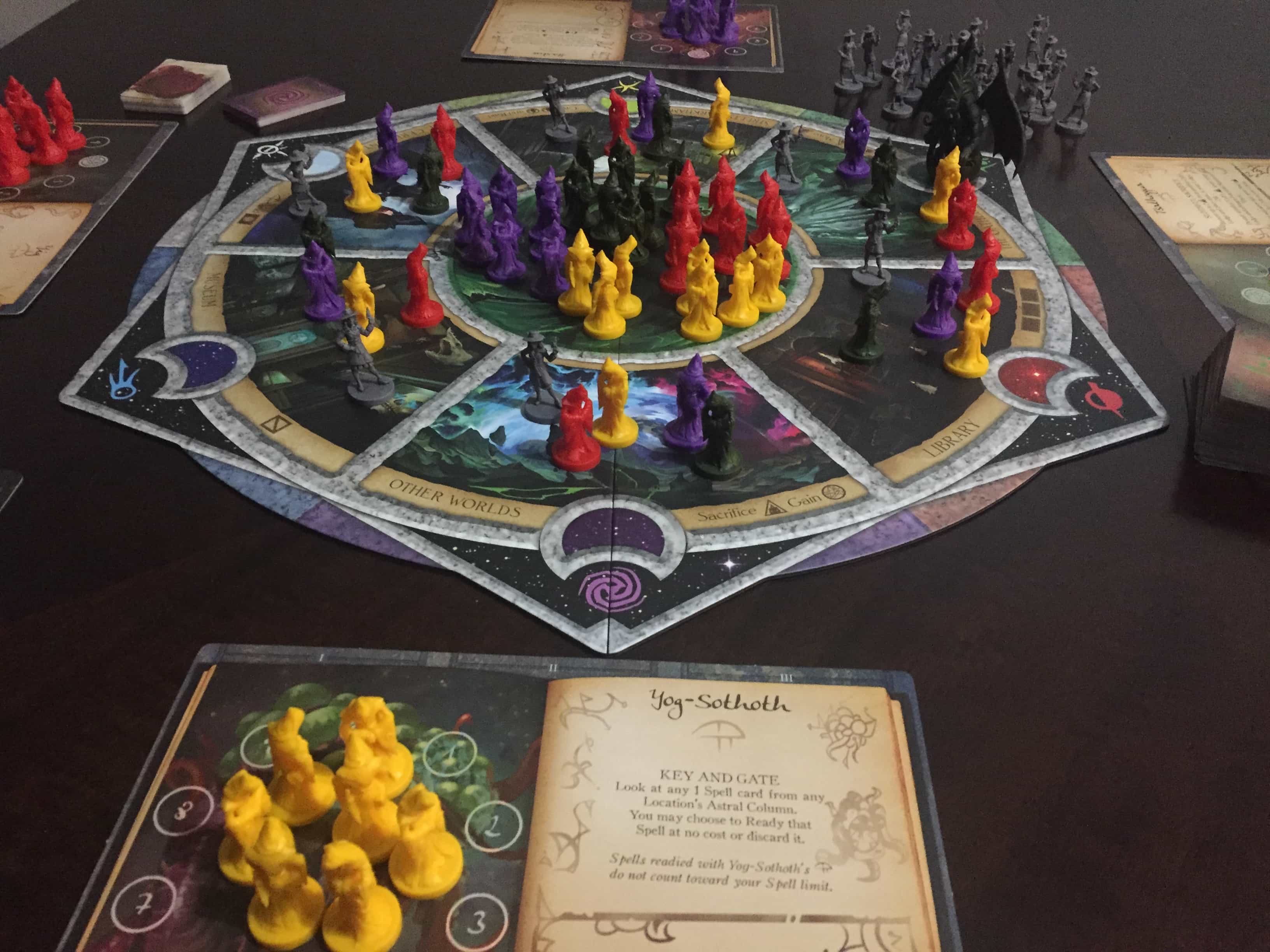
In Fate Of the Elder Gods, you adopt the role of a head cultist dedicated who to summoning an Old One to whom you are pledged. Everyone must race to summon their sworn Old One before competitor cults can do the same (why does it matter who wins? Don’t all the old ones turn the world into a hellscape, anyway?).
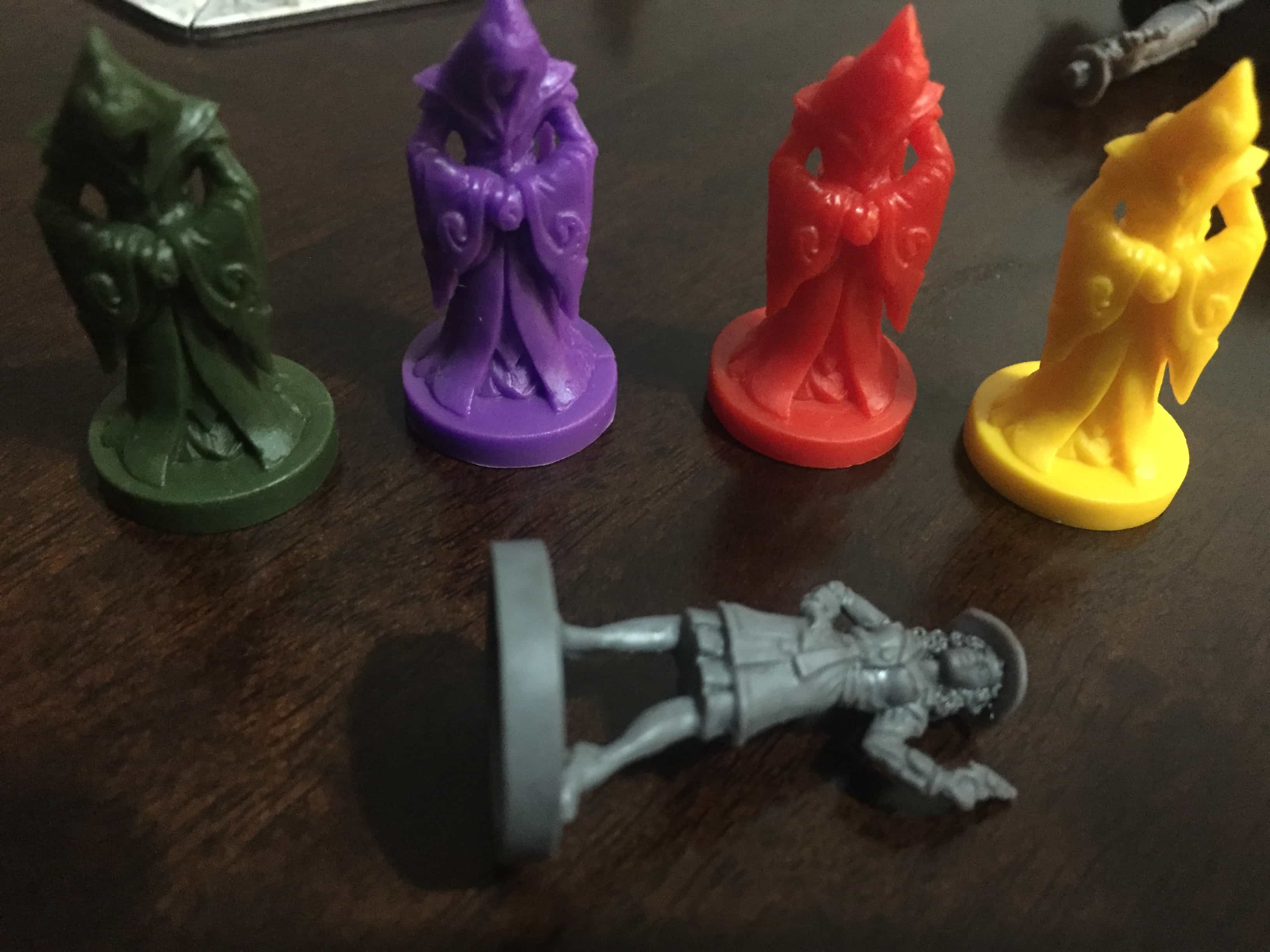
You will start with a player mat (or, “lodge”) depicting the Old One of your choice, as well as a small trove of cultist minis to do your bidding. In addition, you also begin with a hand of three cards. The colored symbols on the backs of the cards drive much of the gameplay.
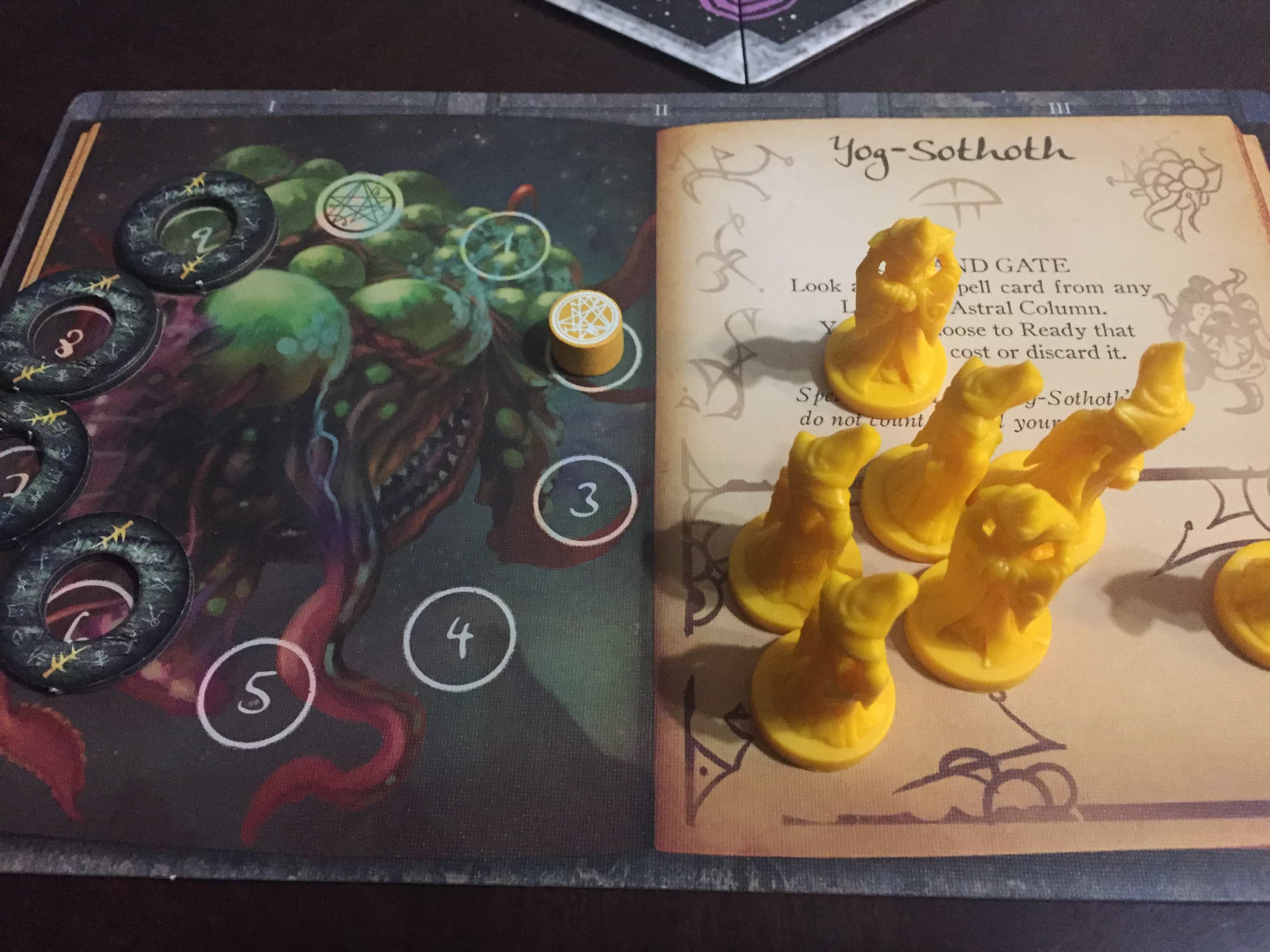
A turn consists of playing a symbol card next to the big Cthulu mini on the board, which will send it off to another action space. At that new space, you will generally do two things: place a cultist from your player mat on to the board (which will attract an investigator – more on them later) and use the special power of the space.
If you have “control” of the space (meaning you have three or more cultists there and you outnumber the opponent cultists), then you can take an additional action. If you don’t have control, you can roll one of the game’s custom dice for a 1 in 6 chance to gain control. Because, hey, Cthulu = rolling dice, right?
Board actions are fairly straightforward. You can, for example, draw more cards, acquire artifacts which provide additional benefits, or sacrifice your minions to advance your summon track. If you hit 9 on your personal summon track, you win!
On top of that simple engine, players gain tactical choices, perform combos, and do all kinds of shenanigans through the game’s spell system. Anytime you play a card to move the Cthulu figure around the board, the card stays at the previous space. On later turns, anyone can then move the Cthulu figure back to the space and use those symbols to prep and cast spells from their hands.
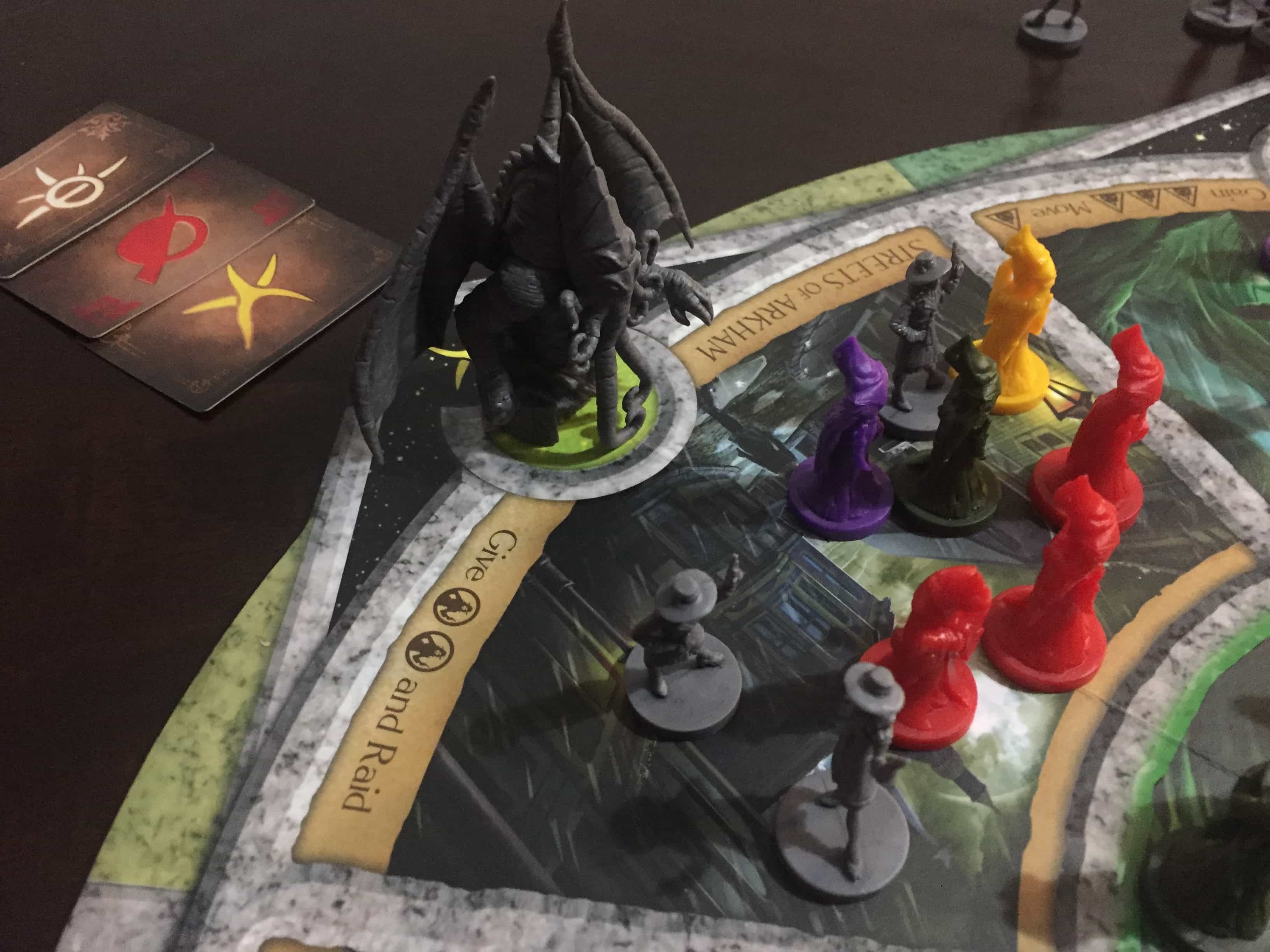
Once prepped, you can either use your spell for its main effect, or leave it there with its symbol side up to help you cast more spells later. The (sometimes) really nasty part, though, is that prepping the spell discards the rest of the magic cards on that space. Very often, an opponent will prep a spell and ruin the magic in the very spot where you hoped to cast your big spell. Doh!
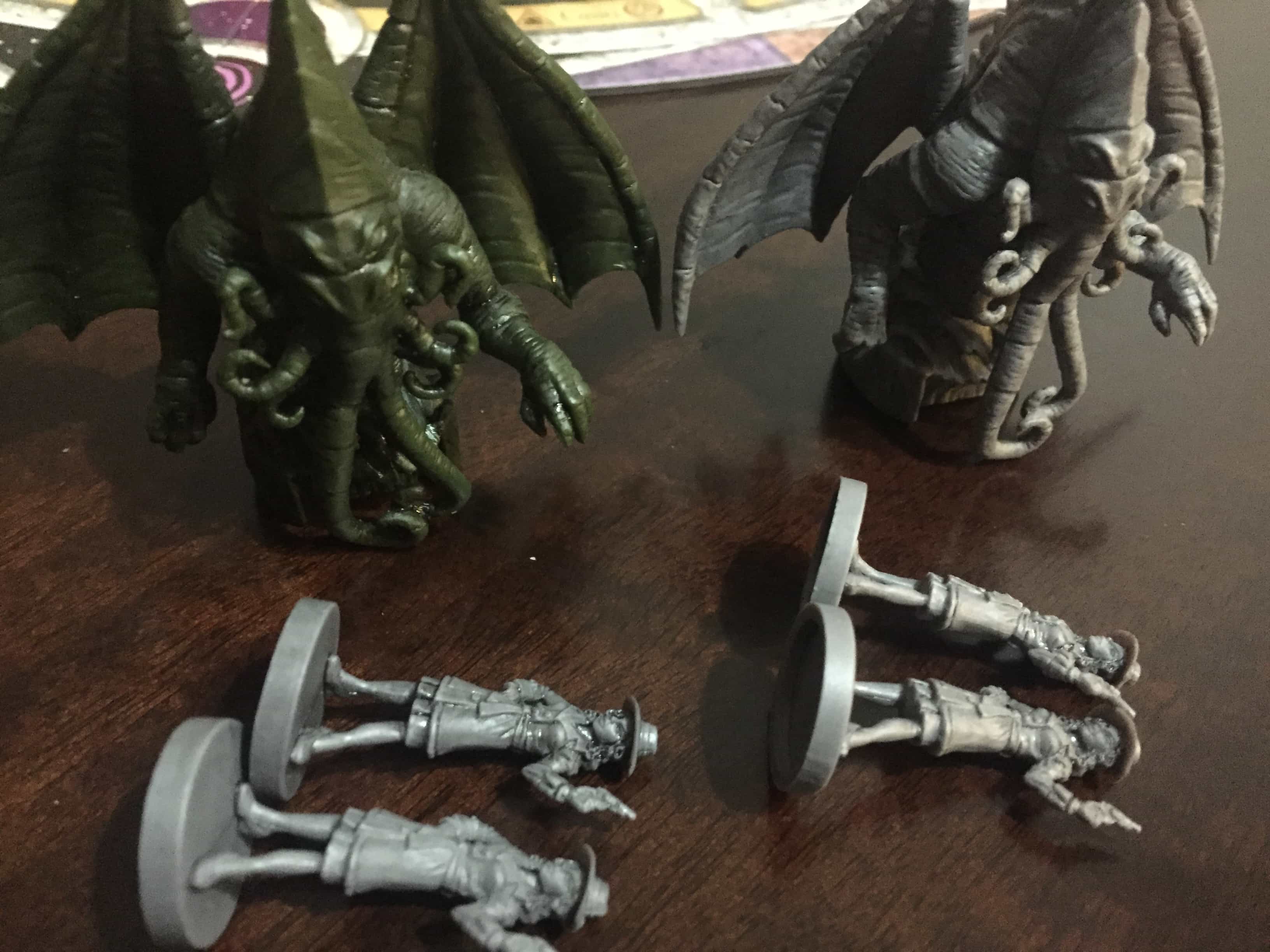
Investigators present another obstacle to success. As mentioned before, placing a cultist mini draws the attention of investigators. If you land on a space with three or more investigators, you have to take them into your lodge. From there, you become prone to raids.
Raids are one among a few ways to acquire Elder Signs, which are bad for you. If you acquire too many Elder Signs, then you lose the game and trigger the endgame for everyone else.
You will roll the special custom dice to resolve many of the game’s key actions – particularly raids and sacrifices of poor cultists to advance on your summon track.
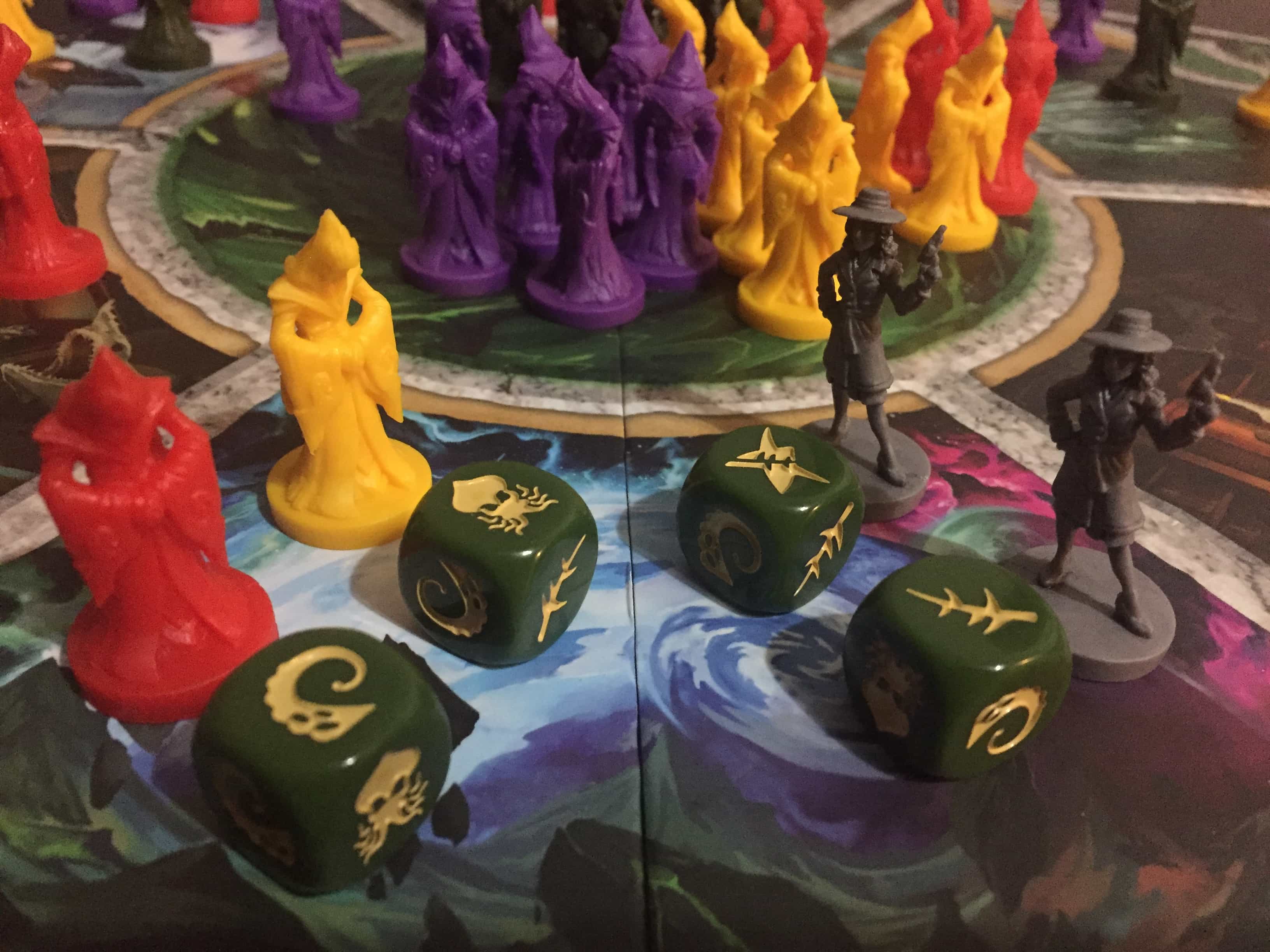
Taken together, I feel that the dice, the card play, and the spell resource system introduce enough randomness to discourage long term strategic planning. Instead, the winner usually executes short term strategies and reacts to board situations on a tactical, turn-by-turn basis.
What I didn’t like about Fate of the Elder Gods
I like this game alot, so I’d like to get my criticisms out of the way first.
For two separate reasons, I worry a little bit about Fate of the Elder God’s replayability. If you choose to win via completing the summon track, there’s only one space on the board – the Outer World – where you could do that in any kind of volume. Many games can reduce to permutations of getting lots of cultists into that spot and rolling a bunch of dice. There’s lots of ways to do that, but some players might grow a bit bored (not me, but some). In another big, tactical game – Blood Rage – players could vie for lots of different zones and therefore had less of a chance to feeling shut out. In Fate, though, that Outer Worlds space calls like a beacon – either you go for it the best way you can, or you spend turns blocking it.
A bit of a riskier path to victory is filling someone’s board with Elder Signs and triggering the endgame that way. However, that’s a harder trick to pull off. I tried to do that in the game I described above, only to be foiled purely by dice luck.
Second, the base game gives you a ton of spell cards, but not that many unique actual spells. You get around 20 unique spells to cast of varying degrees of usefulness. That might sound like a lot. However, by your first or second game, you’ll have seen them all.
The expansion, Beasts from Beyond, adds a few more varieties of spells. However, I recommend that expansion only if you really like this game and want to dive deeper in. Many of the expansion spells summon monsters. While very cool, they increase the overhead of the game.
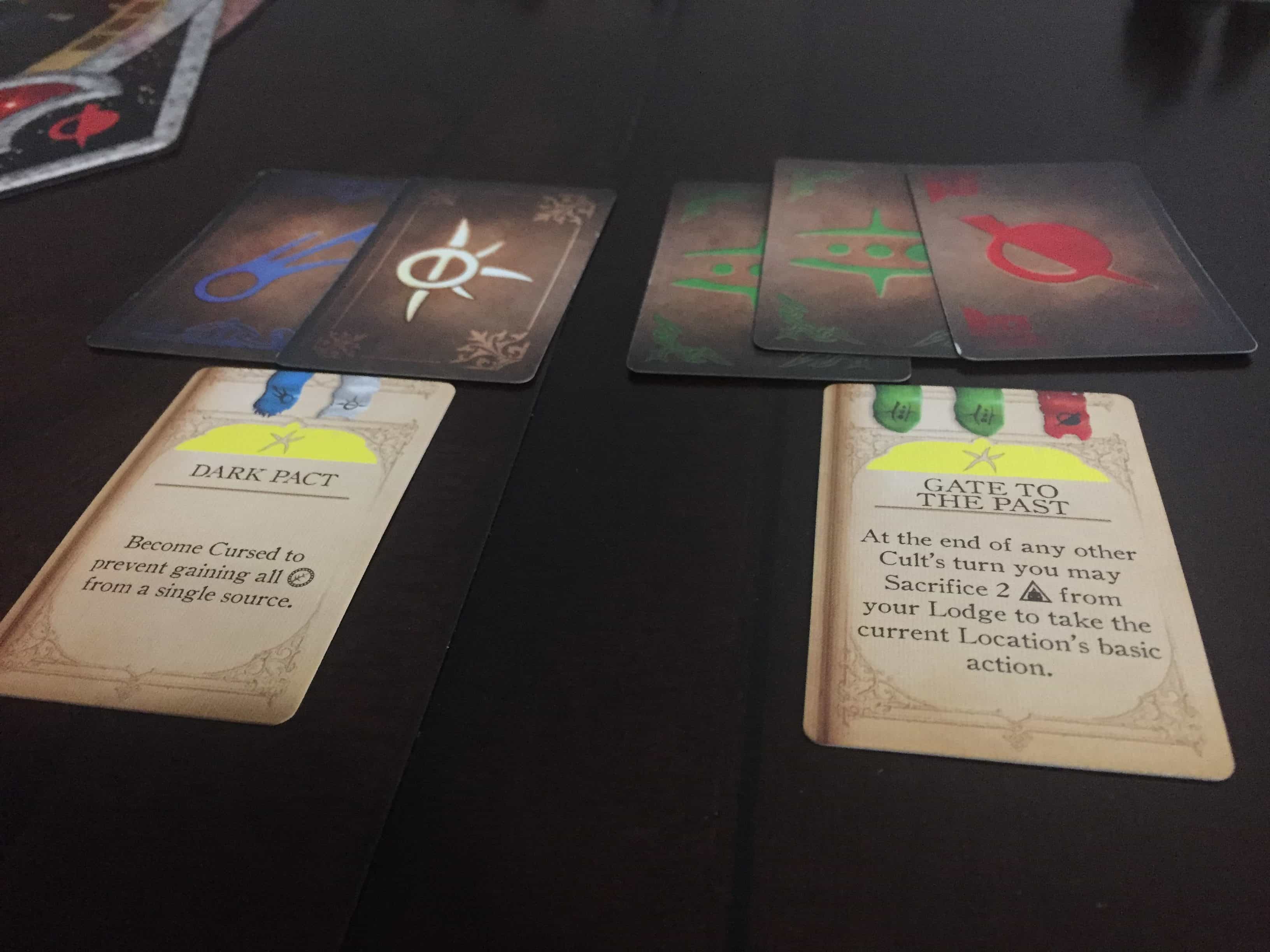
My main criticism of the game lies in the spell system, which might be a bit too cute for its own good. I mentioned before that players can really screw with one another by going to a spot and casting a spell, which discards whatever spell symbols reside there. Therefore, to increase your casting flexibility, you need to prep spells in order to have symbols on your mat. However, if you can’t even get your first spell down because everyone is hogging the symbols, then you might spend too much of the time feeling frustrated and stuck.
The game has a solo mode, which I *almost* adore. It has a ton of potential. Basically, you have to complete your track while dealing with investigators who flood the board at a far faster rate than in a multiplayer game. The tradeoff is that, because there’s no other player eating spell resources, you can basically prep and cast whatever you want. That sounds like fun, but it can also reduce the turn-by-turn tension. In addition, many of the spells and player mat powers are useless because they only affect other cultists. All of this makes the solo mode feel half baked.
Chris Kirkman has said they are developing special solo content to address some of these issues. I’ve got my fingers crossed!
What I liked about Fate of the Elder Gods
As a dad of a young child, I admit that I did not love the idea of playing a cultist who tries to bring about the end of the world. However, I found that the theme was sufficiently cartoony and abstracted to where I didn’t feel like I was actually performing evil. You may as well aim to summon plush Cthulu. The Lovecraft theme, as conveyed by the art and surprisingly decent components, mostly focuses on style and mood rather than any kind of overarching narrative.
In terms of game weight, Fate of the Elder Gods lands in that “next step” category, right after your typical Ticket to Ride-style games but short of a really thick strategy game. It hits you with a lot of info at the first game. However, you should begin to feel very comfortable with basic strategies during and after the second play.
I liked that each turn seemed to present multiple decent options. Do I go to the Ceremony and activate the special power on my board? Or do I need to deal with these pesky investigators knocking at my lodge? There’s a good chance that, whatever you put your worker, you’ll at least accomplish something.
Some games have unique, player-specific scoring conditions that shape your overall approach, like the Leaders in 7 Wonders or the corporations in Terraforming Mars. Each player mat has a unique power in Fate of the Elder Gods, but it didn’t seem to dictate game strat or play. I appreciated having increased options that didn’t make other options suboptimal in the process.
I mentioned earlier that the random elements of the game made it feel very tactical, which for many is a euphemism for “luckfest.” To be clear, this game has a lot of luck! You never really know, for example, what spell options will be available to you when it hits your turn since everyone uses the same magic cards on the board to cast.

Then there’s the dice. The DICE!! In my first play, I would have won the game had one of my opponents rolled one more elder sign face during a raid. Instead, play passed to the next player, who then won by completing his summon track. I didn’t mind it at all, though. Generally, the dice work out to where you have a 50/50 chance at success, which you can take into account when you want to make a big scoring move – either sacrifice cultists at the Outer World for points, or stooging on your opponents and initiating big investigator raids. Artifacts and other spells also provide ways to manipulate the game’s luck. I found that I liked the dice resolution, even though I know that’s not everyone’s cup of tea.
Who is Fate of the Elder Gods for?
I really, really enjoyed my plays of this game. I struggled with the spell system at first. Eventually, though, things started to click and I found I was sacrificing cultists and provoking raids on my opponents with glee. I recommend Fate of the Elder Gods to anyone who would like a next-step-beyond-gateway experience that also looks good on the table. It helps to be a Lovecraft fan, but I don’t think it’s necessary in order to enjoy what this game offers.

3 Comments
I’ve played the solo a couple times and the multiplayer once. I definitely look forward to bringing it back to game night. The solo play doesn’t quite hit as well as it should, but the regular game is fun. One player was on the verge of winning, so I flooded his lodge with investigators and sealed away his Elder God, allowing for myself and one other player to win with a tie.
I think it’s a really fun multiplayer game that I’m keeping in my collection. I had a similar experience where I saw I was behind and tried to trigger raids in his lodge. However, he refused to roll elder signs! Refused! Makes me want to play again, which is the sign of a keeper. Glad you had fun with it.
Hi! I also like themed games but not necessarily the heavy D&D like RPG systems, preferably a tactical or strategy game like Fury of Dracula. Do you have a recommendation?