

Designed by Marco Magi and Francesco Nepitello and Published by Devir
One of the things I love most about board games, especially euros, is the back story – the real world happenings that inspired the designer to explore the theme.
Sure, there are the fantastical games based on popular fiction or decades old horror stories. But then there are the pockets of history that dig into how a city recovered from disaster or expanded and modernized.
Barcelona: The Rose of Fire is just such a game, and part of what makes it so fascinating is the way in which it delves into that history. It’s not just about the removal of the city walls and the expansion of the city in the late 19th century. It’s about the political and social ramifications of that growth. The unrest and uprising that occurred in the years it took to grow the city, and the corruption that drove the wealthiest in Barcelona ever outward.
It’s with this in mind that you must approach the game, because it is more than just another euro. It’s a game born of its theme and imbued with that theme’s history.
How Barcelona: The Rose of Fire Plays
At the most basic level, Barcelona is a tile laying, city-building game. But if I were to say that alone, you’d get the wrong idea.
This isn’t Suburbia. The city building component, while an important part of winning the game, is held hostage by the game’s other half – the balance of social implications from your actions. It’s an utterly fascinating combination of mechanics that (mostly) works, with a few exceptions.
To start, each player has a hand of cards. There are three types of cards in the game – City Cards, Popularity Cards, and Prestige Cards. You start with only City Cards, but future actions and majority scoring can award you with more powerful Popularity and Prestige cards.

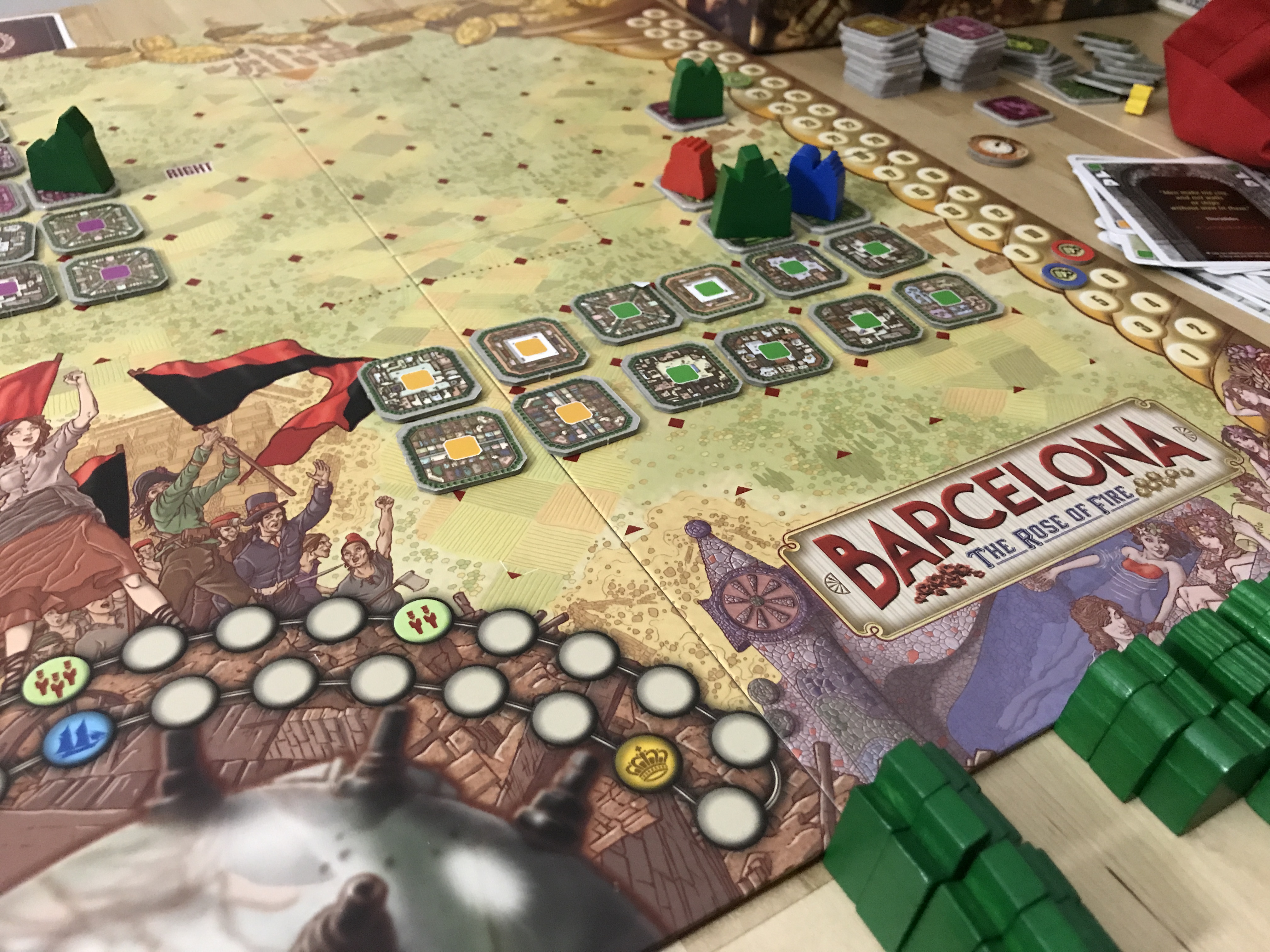
Most cards have on them a color matching one of the three district types in the city, along with several building options. This shows you where you can build, and which buildings you can build. Initial placement requires adjacency to the arrows on the board, but future placement must be done adjacent to existing tiles of that color
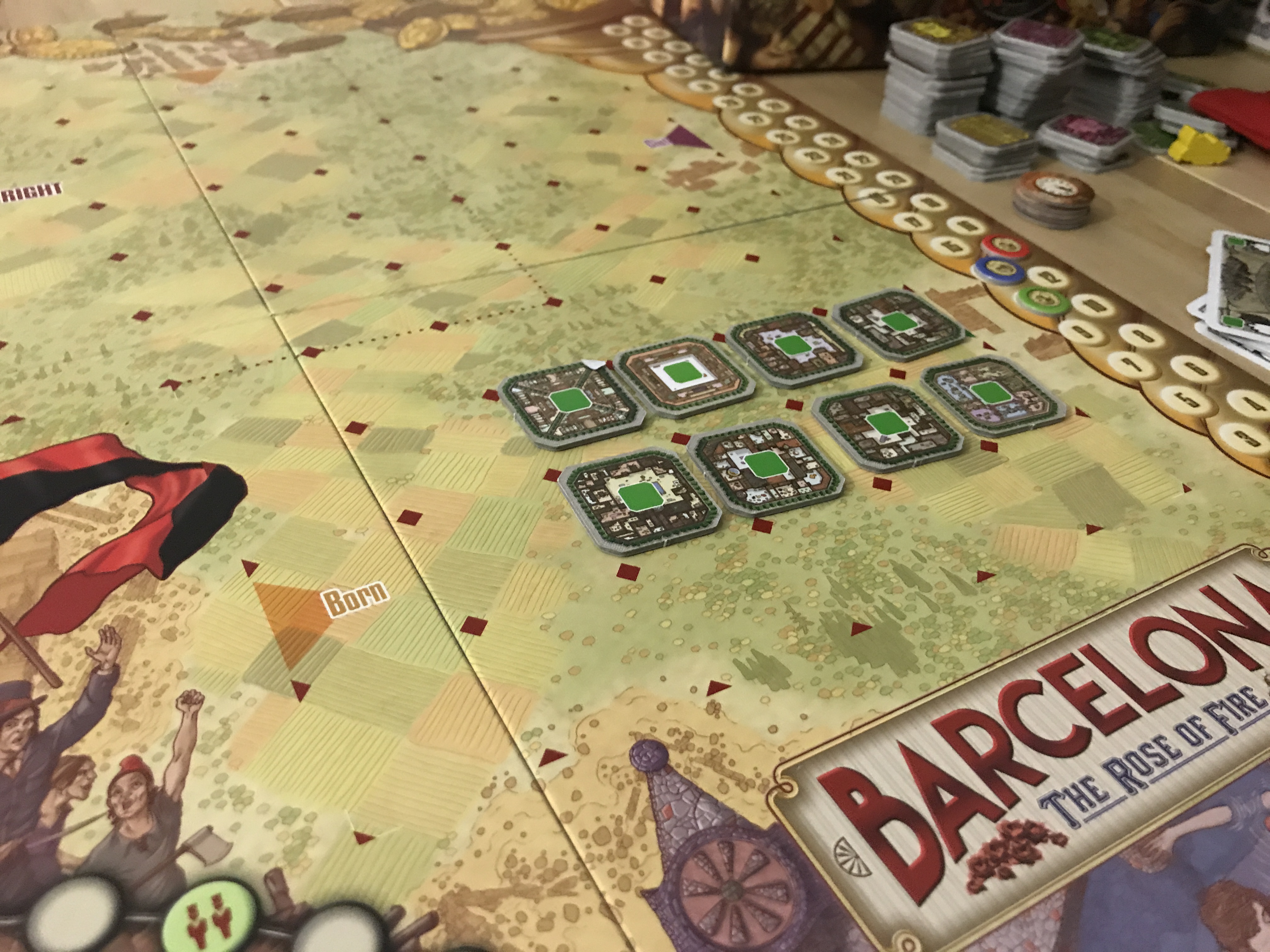
On the board is an Immigration rate for each of 5 Phases. When you play a building, you will subtract its value from the Immigration rate and place that many workers in the Raval. The building values are inverse to their Victory Point values. So if a building is worth 1 for the purposes of building, it is worth 4 victory points. If it is worth 4 for the purposes of building, it’s worth only 1 victory point. Basically, the fancier the building, the more it is worth, but the angrier the workers get.
At the end of each Phase, there is a Rebellion. All workers in the Raval are placed in a bag with some soldiers. You then pull them out to match the immigration rate and the player with the most workers pulled suffers from the Labor Strike card and a drop in prestige. The player with the highest prestige gets a powerful prestige card. Finally, you tally up Popularity on the board based on who has the most of each building type in each of the three districts.
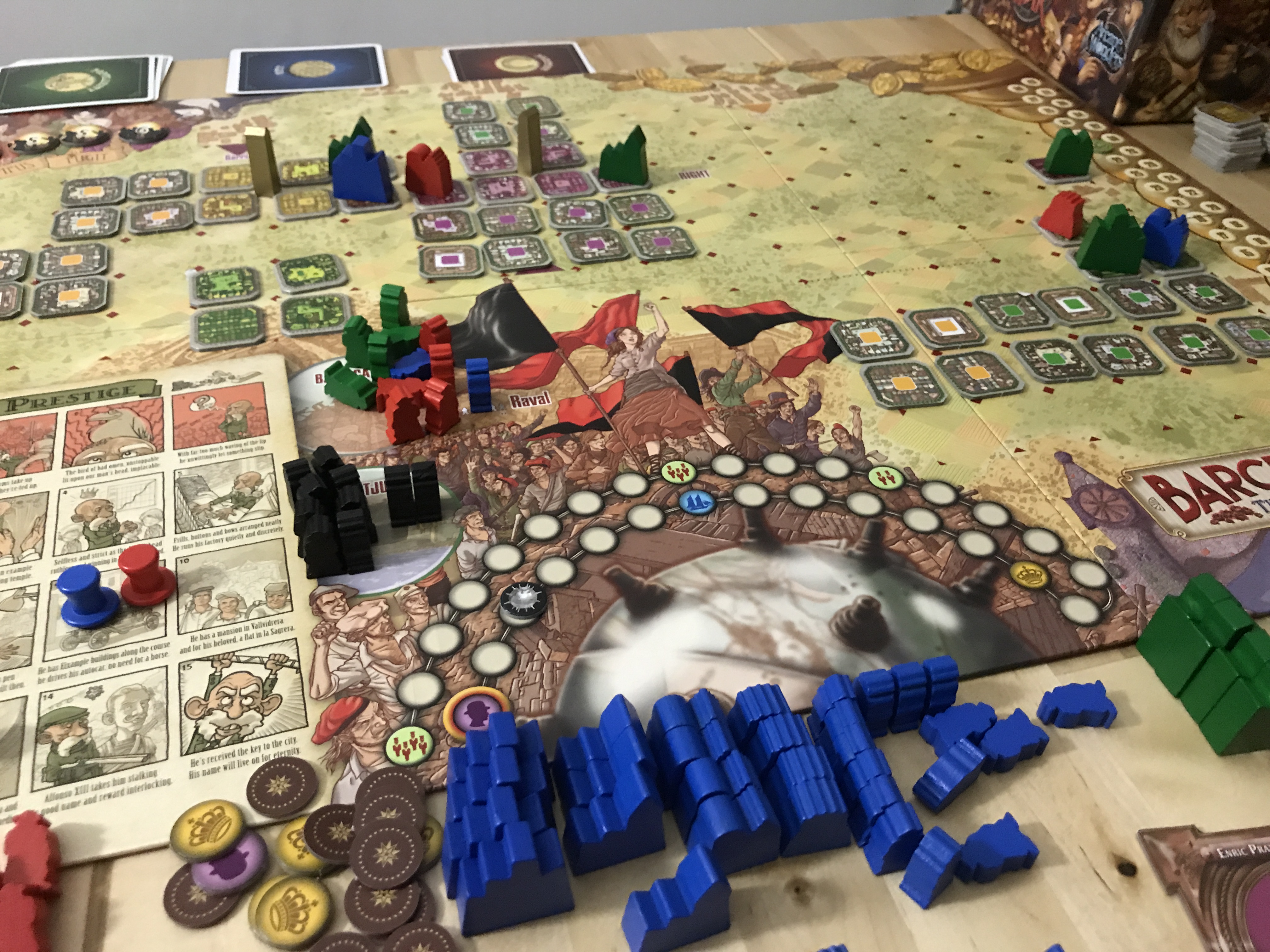
This continues for five phases. You’ll stop after the second, fourth and final phase for End of Phase actions, which include scoring all completed blocks (when four buildings form a block, you mark it and clear it), and quelling protests (getting your workers back and emptying the bag).
The game is relatively quick and scoring correlates almost entirely to the buildings you’ve managed to get on the board with some cards awarding victory points, as well as bonuses for buildings not in completed blocks, and points from influence counters and influence cards (which can be purchased throughout the game).
What We Like About Barcelona: The Rose of Fire
This is an interesting game. On the surface, it looks like any other hand management, tile-laying euro. You play cards, place tiles and score points. But there’s more to it.
It’s ostensibly about expanding Barcelona, but to win the game, you need to carefully balance the impact of your actions across several areas. You need a good number of buildings with solid victory point values. You need a good hand of cards every round from your majorities. You need to keep your prestige level high so you don’t suffer from negative prestige or being in last place. Finally, you need to keep your workers out of the Raval as much as possible to minimize your risk of getting the Labor Strike card.
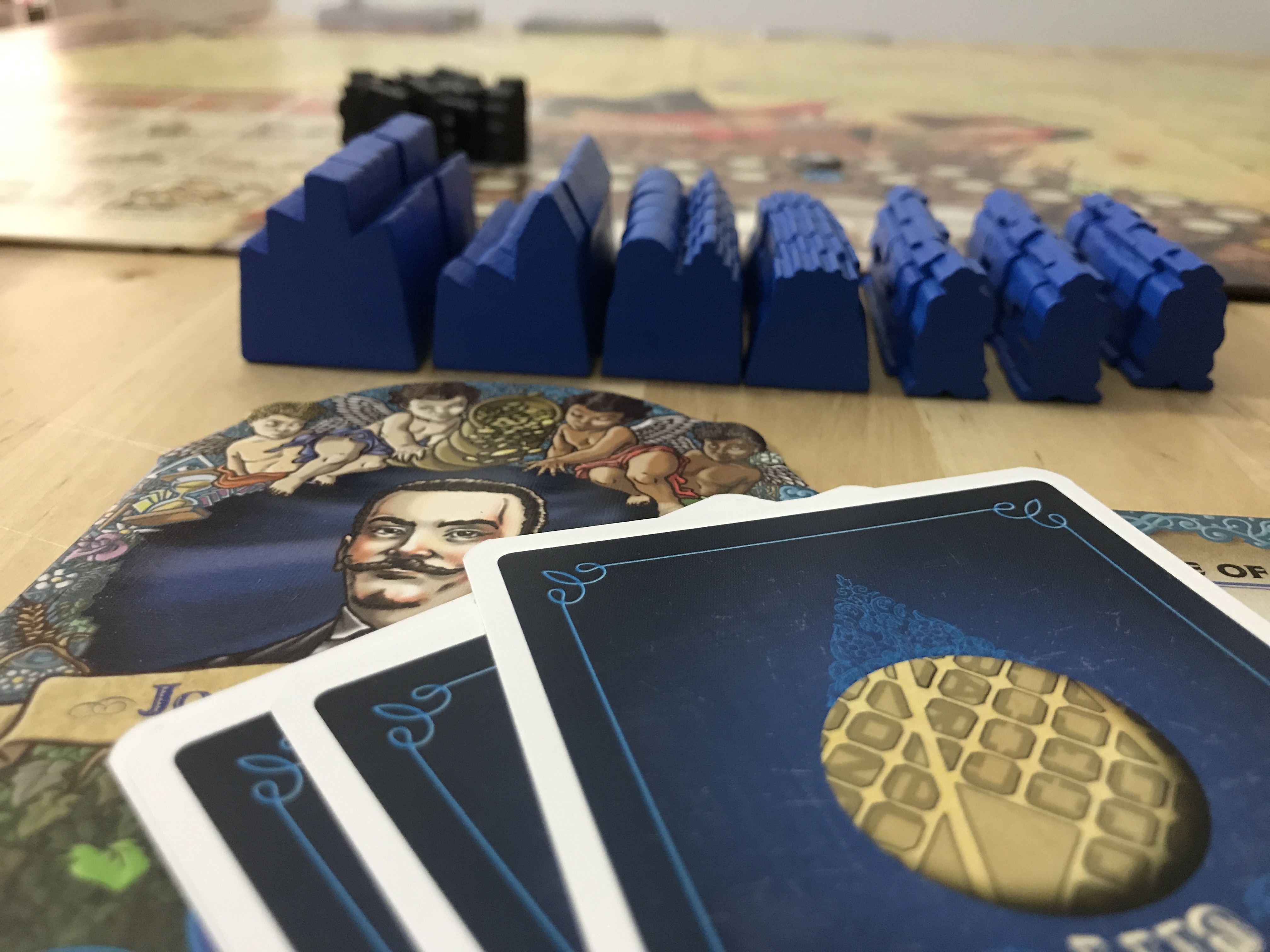
The game does not reward success in building the best and most amazing buildings, nor does it matter if you have the most points early, because it can come back to bite you later.
At the same time, there is always the risk that the bomb track – which increases whenever you pull soldiers from the bag throughout the game – can start blocking access to influence cards, or worse, make your high value buildings worth nothing at the end of the game.
You have to be carefully engaged with every aspect of the game, watching majorities, tracking the probability that your workers are pulled from the bag, and at times, taking calculated risks to put out higher value buildings and complete blocks that will reward you with influence and later with cards.

It’s that balance that makes this such an interesting game, and one that has become more intriguing each time I get it to the table. At the same time, this is a beautiful game to look at, which spectacular artwork, and a tableau of wooden buildings that quickly spread across the board. It’s eye-catching to passersby, and a great representation of the culture and history behind such a trying time in Spanish history.
What We Don’t Like About Barcelona: The Rose of Fire
I wish I could stop there and declare this an easy buy, but there are some issues that are important to note. In each of my plays of this game, the same issue has popped up and it’s a tough one to overcome because it’s not something you can coach people through.
The randomness of the Rebellion stage can be incredibly frustrating when it hits someone who feels they have done everything right. Much like dice rolls in a combat-driven game, you can mitigate your luck as much as you want, but are still at the mercy of the roll. In Barcelona, you can put fewer workers in the Raval (and in turn acquire fewer points for yourself), but that doesn’t guarantee they aren’t pulled from the bag in the Rebellion stage.
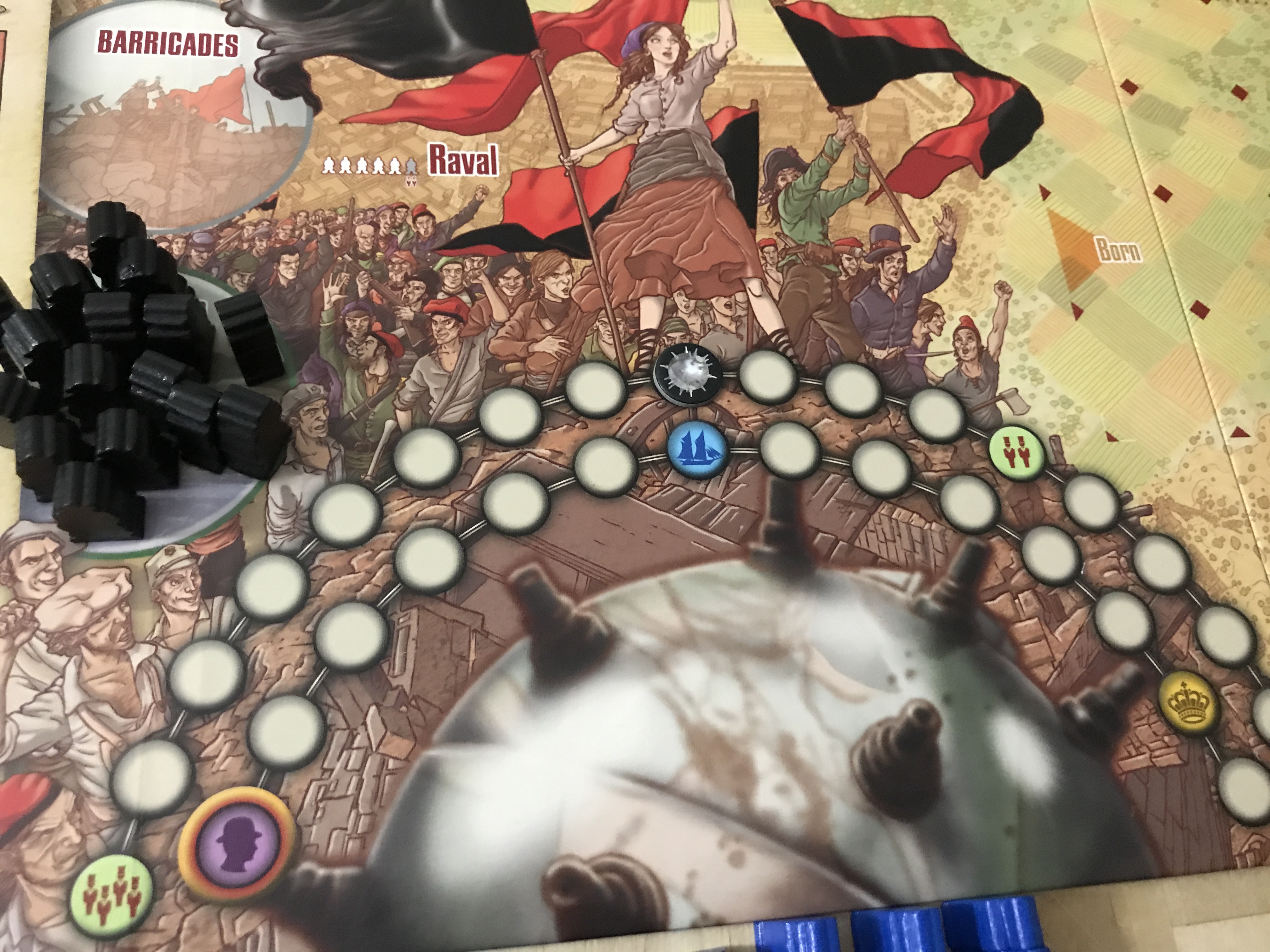
And for a player who carefully manages their turns and still gets stuck with the Labor Strike card, it’s not a fun experience. Most euros have negative outcomes if you don’t play the game’s internal rules. That’s fine – I may not be a huge fan of Agricola, but I understand what is expected of me and generally aim to feed my people and avoid losing points. In Barcelona, someone will be punished every round. Even if every player is as conservative as possible, someone will get that strike card and be pushed back on the Prestige track, starting them from behind a bit in the next round. It hurts.
In addition to the Rebellion phase, there is the randomness of the draw. Most cards offer variety in what you can place on the board, but it’s possible to not see the types of buildings you need to gain majority in an area or to avoid high risk actions, and if you don’t get popularity cards, your options are far fewer than someone who does. It creates run away leader situations in not all, but some games.
The Bottom Line
After my initial play, I was a bit disappointed with Barcelona. The main actions didn’t feel strategic enough and the end of phase process felt too random. After several more plays, I’ve warmed to the game significantly. It is a tightly packed concept and utilizes a combination of mechanisms to good effect. What initially seems on rails in the building placement phase has a lot of nuance to it, requiring you to carefully select not only the placement but the building type each and every time you play a card.
The randomness cannot be undone, but you can mitigate it, and it more often than not works out the way it’s meant to, but that’s not always the case, and the risk of a runaway leader, especially with newer players with fewer than 2-3 plays under their belts is very real. It makes it hard to recommend, if only because it’s the type of game that unfolds over time. The first and possibly second plays can be frustrating and unclear. Even if you enjoy it (as I do), the game is hard to table because new players find it frustrating to learn.
For this reason I can’t fully recommend Barcelona: The Rose of Fire. It’s a game I enjoy and feel is highly evocative of its theme, both in visual and gameplay design, but it’s also a hard one to get to the table and a harder one to walk people through because of some of the elements mentioned.
